

A very delicate flavor for a truly elegant recipe!

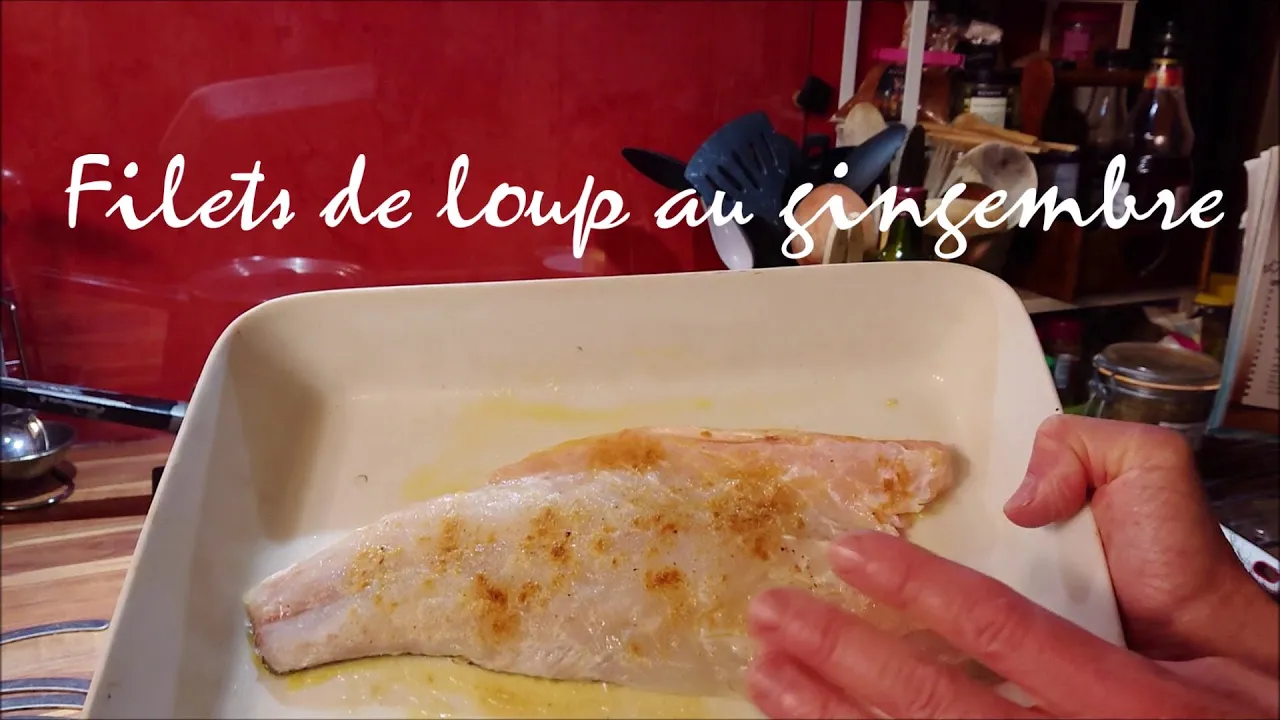
Ginger Sea Bass Fillets
Preparation: 15 minutes
Marinade: 15 minutes minimum
Cooking: 10 minutes
- 200 g of sea bass fillet per person
- 2 lemons
- Olive oil
- 2 teaspoons of ground ginger
- 1 shallot
- 10 cl of dry white wine
- 4 tablespoons of crème fraîche
- 1 teaspoon of fennel seeds


1
MARINADE: marinate the sea bass fillets in the lemon juice, 3 tablespoons of olive oil and 1 teaspoon of ground ginger.
2
PREPARING THE SAUCE: in a saucepan, sauté 1 finely chopped shallot in 1 tablespoon of olive oil with the juice of half a lemon and 1 teaspoon of ginger. Add 10 cl of white wine. Bring to a boil. Reduce as much as possible. Add 4 heaping tablespoons of crème fraîche.
3
IN A DISH: arrange the fillets in a baking dish. Coat them with the cream mixture. Garnish with fennel seeds.
4
COOKING THE FISH: bake for 10 minutes at 200°C (400°F).


From sea to plate
Bar commun ou loup (local name: bar franc, loubine, louvine)
Latin name: Dicentrarchus labrax
The “common bass” of the English Channel and the Atlantic is called “loup” in the Mediterranean, and both names refer to one and the same fish, the European sea bass, found along the entire French coastline. There is another species, the “spotted sea bass,” found only along the Atlantic coast. Very similar in shape, though smaller, it is easy to tell apart by the black spots all along its back.
Swimming alone, in small groups, or sometimes in large schools, it can be caught from the north to the south of France in a wide variety of conditions: offshore or near the coast, in shallow or deep water, over sand or rocky areas, and especially around wrecks. Its behavior is just as varied: depending on the moment, this predator can be curious or, on the contrary, wary. It’s the king fish of all recreational anglers and spearfishers! Prized as much for the thrill of catching it as for its flavor and the size it can reach (commonly 6 to 8 kg, with some specimens over 10 kg), it is a true “trophy” fish.
In the kitchen, sea bass has white, delicate, fairly firm flesh with a pleasant taste. It is easy to gut and scale, and its bones are fairly large and not too numerous, which is a welcome feature on the plate. You can successfully prepare it in every way (grilled, baked, poached, etc.), whole or as fillets. Be careful with its dorsal fin when handling it, though (wear gloves or cut it off), since it bristles with very sharp spiny rays (which may explain the origin of its French name, “bars” meaning a point in German) that can easily pierce and injure your fingers. The main tip for fully enjoying this fish at your table is to keep a close eye on the cooking so as not to overcook it, which would dry out its flesh and also alter its flavor.
